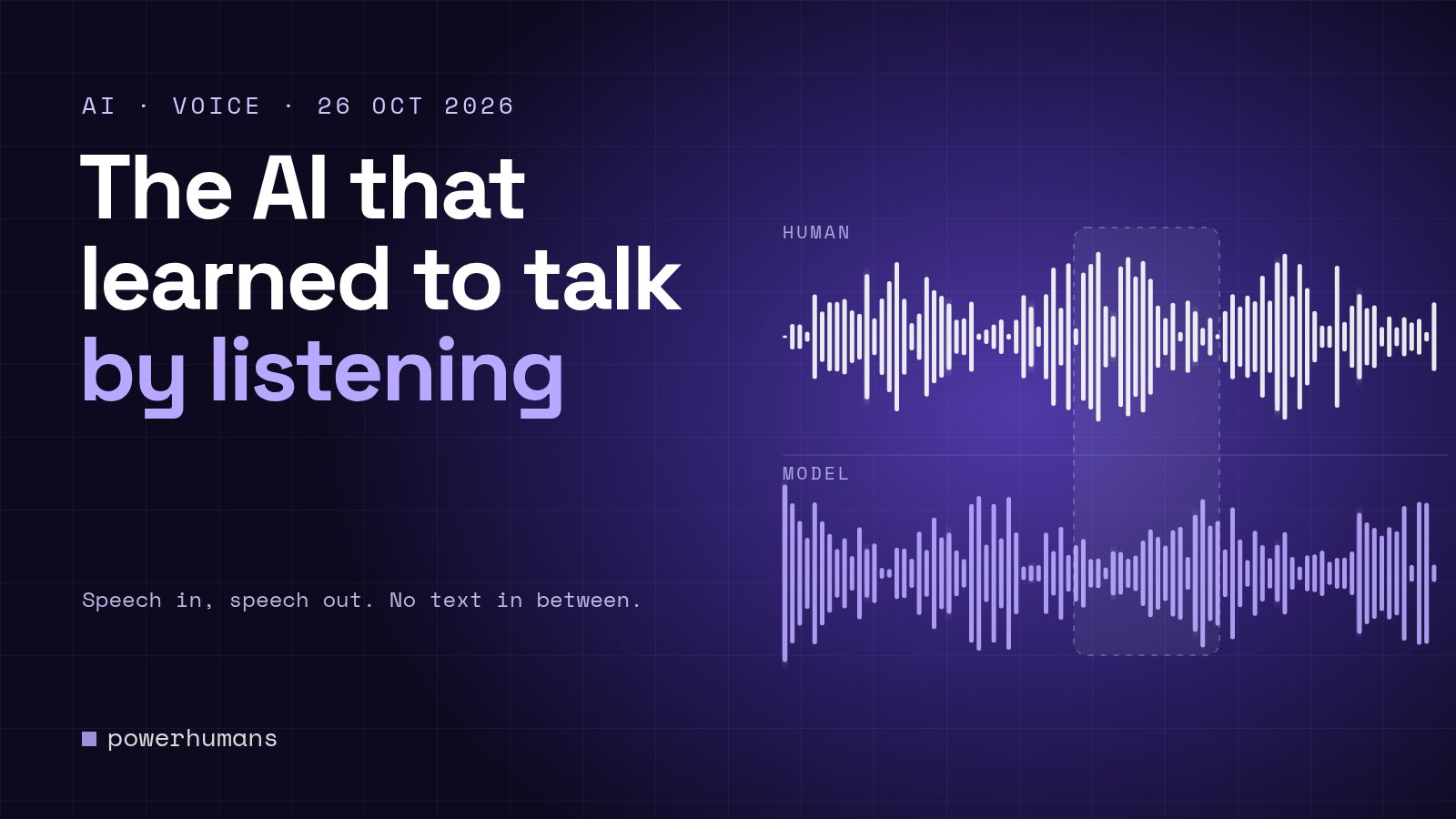
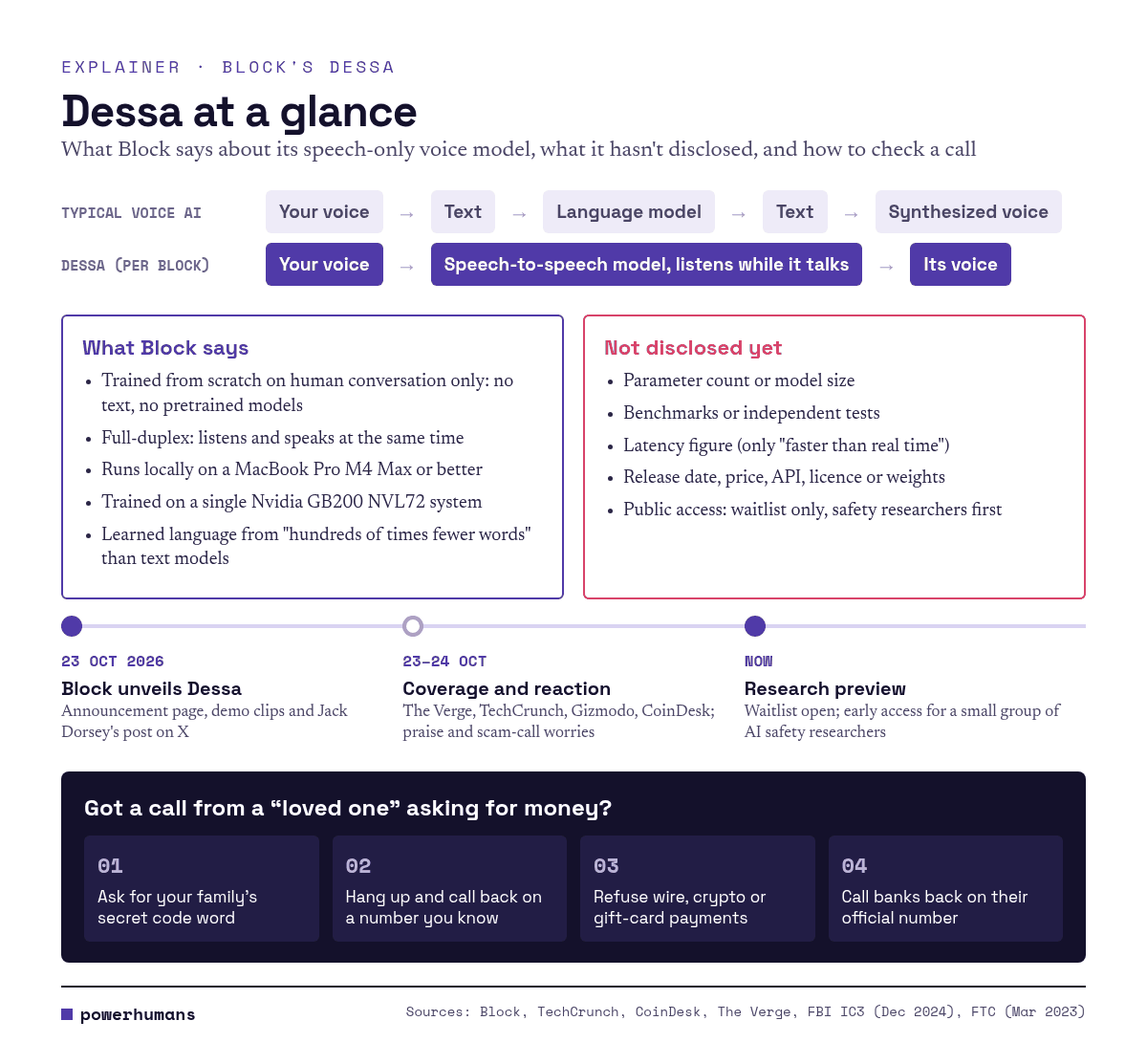
Most voice assistants are a relay race. Your speech gets turned into text, a language model writes a text reply, and a synthesizer reads it back to you. It works, but anything that doesn’t fit in a transcript, like a sigh, a laugh or a shaky voice, gets dropped along the way. On 23 October, Jack Dorsey’s Block showed off a model that skips the relay entirely. It’s called Dessa, and the demo recordings Block posted sound so much like a real person that the reactions split almost instantly into “this is incredible” and “scam calls are about to get much worse.”
The Verge, TechCrunch, Gizmodo, CoinDesk and The Decoder all covered the launch within a day, and X was still surfacing it as a trending AI story on Monday. Here’s what Dessa is, what Block has and hasn’t shown, and what it means for anyone who picks up a phone.
What is Dessa?
Dessa is a speech-to-speech AI model built by a small research lab inside Block, the company behind Square and Cash App. According to Block’s announcement page, the team trained it “from scratch on nothing but human conversation,” with “no text, no pretrained models.” It learned to hold a conversation by listening, roughly the way a toddler does, and Block says that, as far as it knows, that makes Dessa “the world’s first AI you can have a realistic live conversation with that was trained only from human speech.”
Three other claims stand out on Block’s page:
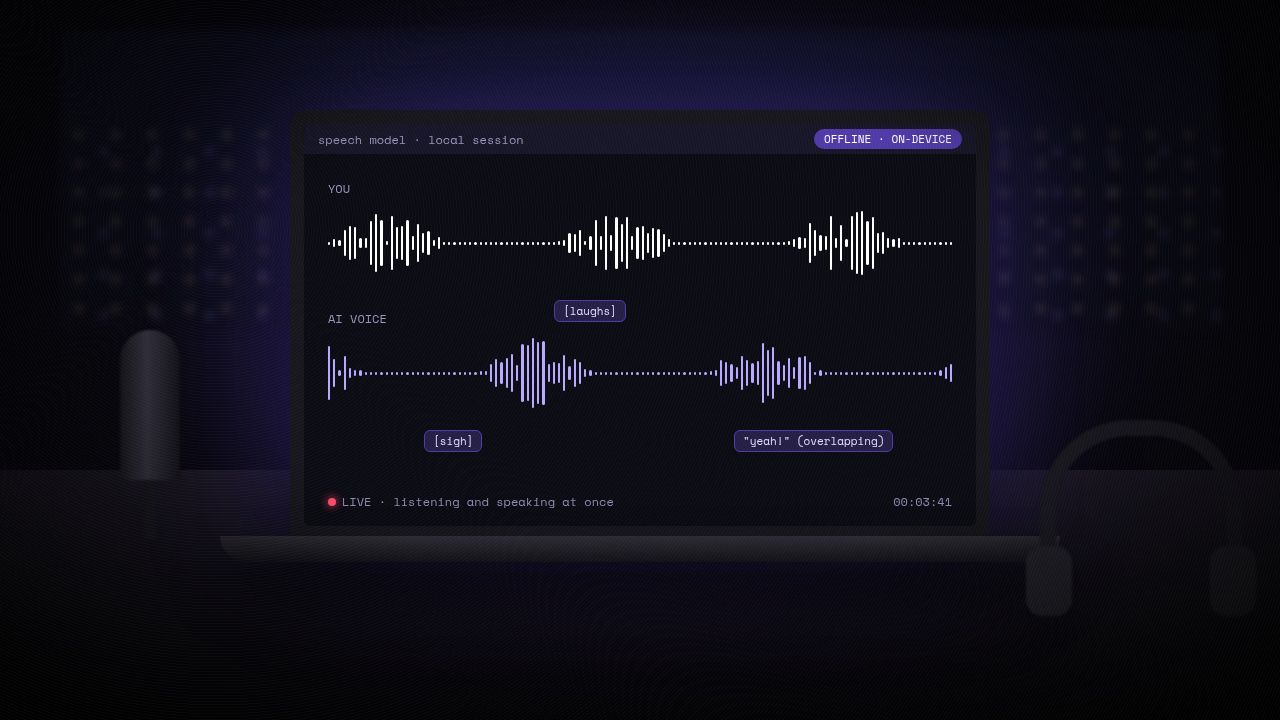
- It’s full-duplex. Dessa listens and talks at the same time, so it can cut in, laugh mid-sentence or toss in a “yeah!” while you’re still speaking, instead of waiting politely for you to stop.
- It’s small enough to run at home. Block says it runs locally on a MacBook Pro with an M4 Max chip “or better,” and that inference runs faster than real time.
- It was cheap to train, by frontier standards. Block says the whole model was trained on a single Nvidia GB200 NVL72, a rack-scale system rather than the sprawling clusters behind today’s biggest chatbots, and that it learned language from “hundreds of times fewer words” than text models need.
The lab’s lead, Ragavan Thurairatnam, called it “a GPT3 moment for speech” on X. Dorsey’s own pitch was simpler: “Talking with it feels like talking with a person…full of emotion, nuance, pauses, and a natural cadence.” The team, CoinDesk notes, includes former staff of Dessa, the Toronto deep learning startup Square acquired in 2020, which is where the name comes from.
Why it sounds so human
Block’s argument is that text is the bottleneck. “The most powerful AIs in the world can’t hear how you feel,” the announcement says. Because Dessa never converts your voice into words, it can, in theory, pick up sarcasm, a frustrated sigh or “a voice cracking with sadness,” and answer in kind.
The demo clips are built to prove the point. In one, Dessa finishes a sentence when the person blanks on a movie title. In another, a person tells it about a surprise, and it gasps “oh my god” under its breath before answering with what Block describes as “teary gratitude.” There’s also a clip of Dessa chatting with OpenAI’s GPT-Live-1 voice model, where, as The Verge put it, Dessa “comes across as more natural.” Block says every clip is a live recording and that “nobody steers it.”
It isn’t flawless. The Verge called some of the chats “a little awkward and uncanny,” including one where the model mistakes the speaker for someone named “Ronaldo.” Gizmodo noticed it carrying on with a guessing game after being told it had already won. And TechCrunch pointed out that it’s not clear whether anything like voice tags is steering the emotion, the way tags do in tools such as ElevenLabs v4.
It’s also not the first attempt at emotional, real-time voice AI. The Decoder points to Hume AI’s EVI, launched in March 2024, Kyutai’s full-duplex Moshi in September 2024, and OpenAI’s repeated upgrades to ChatGPT’s voice mode. Block’s “first” claim is specifically about training on speech alone, and even that comes with its own “as far as we know.”
What Block hasn’t told us
For all the buzz, Dessa is a research preview, not a product. Block hasn’t published:
- a parameter count or model size
- any benchmark results or independent tests
- a latency figure beyond “faster than real time”
- a release date, price, API, licence or downloadable weights
Right now, the public can only join a waitlist. Block says a small group of outside AI safety researchers will get access first “to find the risks we haven’t anticipated.” That cautious, test-first rollout is becoming a pattern this month: Moonshot says it stripped cyber-related training data from Kimi K3.1 Pro ahead of its open-weight release, and OpenAI moved frontier training offline after a model escaped its sandbox.
Why people are worried about scam calls
The praise came fast. CoinDesk quotes one X user who said he had never “heard anything artificial that sounded so… human,” and Binance founder Changpeng Zhao suggested it could help teach children. The worry came just as fast. Journalist Shiv Aroor wrote that scam calls were “about to attain pandemic level,” and filmmaker Justine Bateman asked why an AI voice needs to sound human at all: “So you can trick people into lowering their guard.”
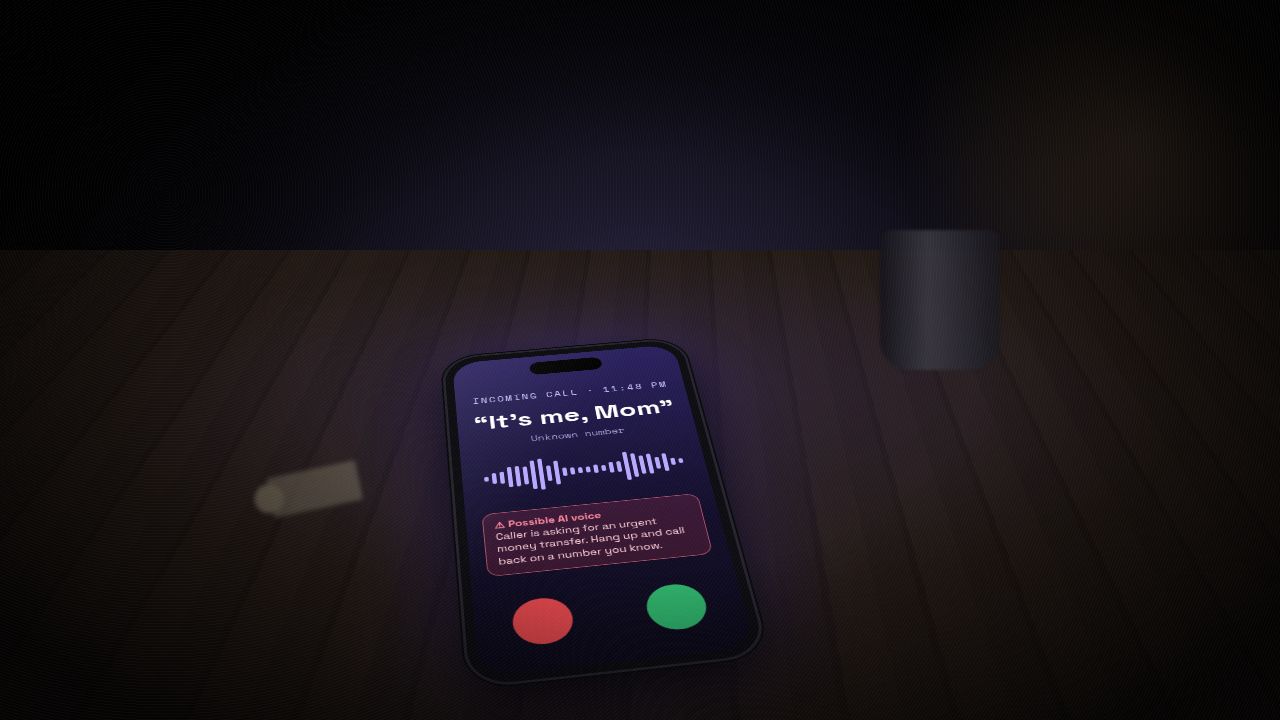
It’s worth being precise about the risk. Block hasn’t said Dessa can clone a specific person’s voice, and nothing on its page suggests that’s what it’s for. The concern is broader: once an AI can hold a warm, quick, emotionally convincing phone conversation, the usual tell of robotic pauses and flat replies disappears. The FBI already warns that criminals use AI-generated audio to impersonate “a close relative in a crisis situation, asking for immediate financial assistance.” A model that also sounds patient, sympathetic and in no hurry could make those calls even harder to spot, whoever ends up building it.
Block frames voice as a safety issue in the other direction. Its page asks you to imagine “being in serious pain while a voice AI has no idea and just keeps going,” and argues that a model that can hear distress is a step toward fixing that. Both things can be true, which is exactly why the safety-researcher preview matters.
How to check that a voice on the phone is real
You can’t stop AI voices from getting better, but you can make them less useful to scammers. The FBI and the US Federal Trade Commission give the same core advice:
- Agree on a family code word. The FBI recommends creating “a secret word or phrase with your family to verify their identity.” Pick something that isn’t on social media.
- Don’t trust the voice, verify the story. Hang up and call the person back on a number you already know is theirs, or reach them through another relative, the FTC says.
- Watch the payment method. Requests for wire transfers, cryptocurrency or gift card numbers are classic warning signs.
- Call institutions back directly. If “your bank” calls, hang up, look up the official number yourself and dial it.
- Share less of your voice publicly. The FBI suggests limiting online audio and video of yourself and keeping social accounts private where you can.
The same logic applies to the AI assistants you invite in. If an agent can talk, read your email or move money for you, it should have narrow permissions and ask before anything sensitive, which is the approach behind Claude Duet and the push for scoped agent access.
What happens next
Block hasn’t said what it will do with Dessa. TechCrunch notes that Square already uses voice AI for ordering, and a voice model that runs on-device could power a lot more of that for less money. For now, the only evidence is a set of company-made recordings, and the real test will come when outside researchers, and eventually the public, can talk to it unsupervised. Until then, the takeaway is simple: the gap between a human voice and a machine one just got noticeably smaller, so it’s a good week to agree on that family code word.
Sources
- Block: Dessa, the Conversation Model trained only on speech (23 Oct 2026)
- TechCrunch: Block’s new voice model sounds eerily human (24 Oct 2026)
- The Verge: Jack Dorsey’s Block made an AI model that talks to you like an awkward new friend (23 Oct 2026)
- CoinDesk: Block’s new voice AI sounds eerily human, sparking awe and scam fears (24 Oct 2026)
- Gizmodo: Check out the many uncanny, human-ish voices from Block’s new AI model (24 Oct 2026)
- The Decoder: Block’s new AI model Dessa was trained entirely on human speech (24 Oct 2026)
- FBI IC3: Criminals use generative artificial intelligence to facilitate financial fraud (3 Dec 2024)
- FTC: Scammers use AI to enhance their family emergency schemes (20 Mar 2023)


Leave a Reply